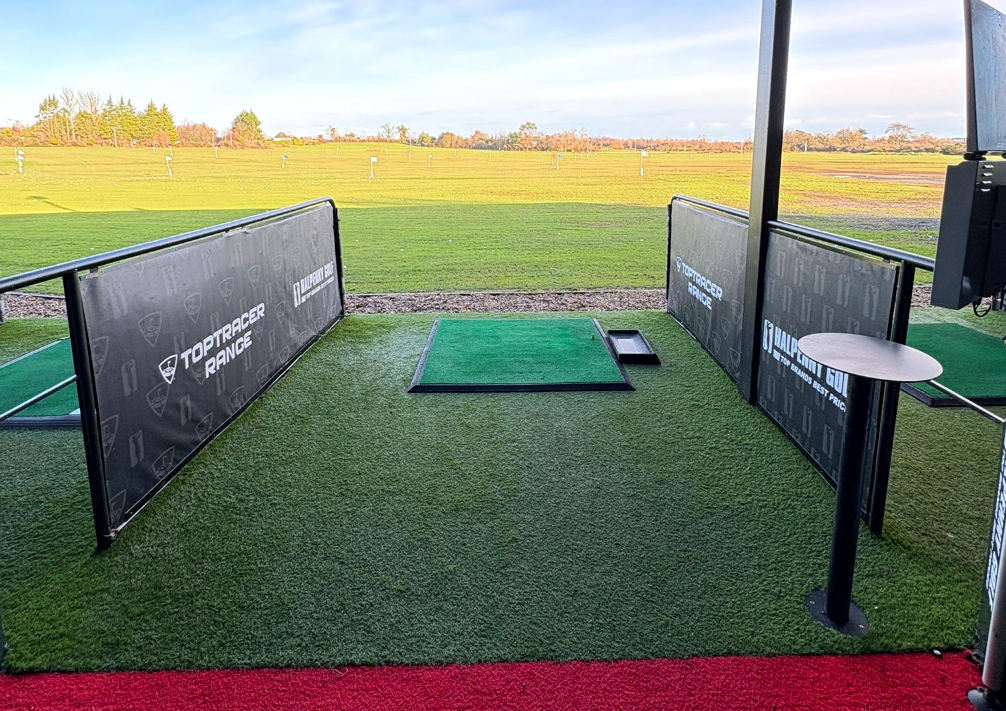
A driving range is a golf practice facility where players hit balls into an open field, toward designated targets or into a simulator. Unlike a round of golf, range sessions let golfers repeat shots without moving between holes. Beginners can develop their swing, while experienced players focus on ball striking, distance control and consistency.
Driving ranges vary considerably in size and equipment. A basic facility may have a row of hitting stations and an open landing area, while larger venues offer covered bays, distance markers, ball-tracking systems and dedicated short-game practice areas.
The layout, hitting surfaces, equipment and maintenance procedures all affect how safely and effectively golfers can practice.
What Is a Driving Range?
A golf driving range provides a controlled environment for practicing full swings and, where permitted, shorter shots. Golfers typically hit multiple balls from one position, making it easier to assess their technique and identify patterns in their shots.
Most ranges have a designated hitting line facing a large landing area. Flags, target greens and distance markers give players reference points for accuracy and distance. Markers help estimate how far a shot travels, although precise carry distances are easier to establish with ball-tracking technology.
Driving ranges may operate independently or as part of a golf course or teaching academy. Some charge by the bucket of balls, while others offer timed sessions, memberships or unlimited practice during a booking period.
Practice on a range differs from playing a round. Golfers rarely encounter the same variety of lies, hazards and strategic decisions found on a course. Instead, they can concentrate on a particular club, shot shape or swing adjustment without changing position after every attempt.
Facilities with putting greens, chipping areas and practice bunkers also allow players to work on the short game, which cannot be developed through full-swing practice alone.
How Is a Driving Range Designed and Organized?
A driving range layout must provide sufficient landing space for the expected range of shots while keeping players, staff and nearby properties protected. Its design takes into account the direction of play, surrounding terrain, available land and expected ball-flight patterns.
The hitting line usually runs along one edge of the practice field, with individual stations facing the same general direction. Adequate spacing between bays allows golfers to swing longer clubs without interfering with neighboring players. Clearly marked boundaries also help prevent anyone from entering an active hitting area.
The landing field must support ball retrieval and routine groundskeeping. It may include target greens, flags, distance signs and designated routes for collection vehicles.
Several factors influence driving range design:
- Available space: The landing area must accommodate expected ball distances and dispersion, with protective netting or other containment measures where needed.
- Orientation: Sunlight, prevailing winds and visibility affect how comfortably golfers can see and track their shots.
- Drainage: Proper grading and drainage prevent standing water and help keep the practice field playable after rainfall.
- Accessibility: Entrances, pathways and selected hitting bays should accommodate golfers with different mobility needs.
- Operational access: Collection vehicles, mowing equipment and maintenance staff need safe routes through the facility.
Signs and clearly defined practice zones help golfers understand where they can stand, when hitting is permitted and which areas remain off-limits.
Types of Driving Ranges
Driving ranges differ in their facilities, technology and intended use.
Traditional practice ranges provide hitting bays, range balls and distance targets. Players practice independently or take lessons with an instructor, concentrating on individual clubs and swing mechanics.
Teaching-focused facilities often have dedicated coaching bays, video analysis equipment and launch monitors. Instructors use these tools to assess shot performance and identify swing characteristics that may need adjustment.
Entertainment-oriented ranges cater to groups as well as individual golfers. Interactive targets, automated ball delivery, electronic scoring and food service turn practice into a more social experience. Games may reward accuracy or target selection rather than traditional golf scoring.
Golf clubs sometimes maintain smaller warm-up ranges near the first tee. These facilities may have fewer hitting positions, shorter landing areas or restrictions on which clubs golfers can use.
Indoor and Outdoor Driving Ranges
Outdoor driving ranges let golfers observe actual ball flight in changing conditions. Wind, temperature and weather can affect how shots behave, while targets at different distances provide opportunities to practice trajectory and directional control.
Outdoor venues need substantial land and regular groundskeeping. Uncovered ranges may also close during heavy rain, thunderstorms, poor visibility or other unsafe conditions.
Indoor practice facilities use enclosed hitting bays where golfers strike balls into nets or impact screens. Some offer basic practice areas, while others have launch monitors or full golf simulators that recreate shots on virtual courses.
Indoor sessions are less dependent on weather, and consistent lighting makes practice easier throughout the year. Where tracking equipment is installed, players can review shot data without relying entirely on visual observation. Measurement accuracy varies with the system, calibration and available tracking space.
Ceiling height, room width and clearance behind the player are important considerations. A bay suitable for short irons may not provide enough space for a comfortable driver swing. Impact-resistant screens, protective padding and secure enclosures are also essential.
Covered outdoor ranges offer an alternative. Roofed driving range bays provide shelter from rain and direct sunlight while allowing golfers to hit into an open field.
Grass and Artificial Turf Hitting Areas
Grass tees and artificial mats create different playing conditions and require different levels of upkeep.
Natural grass provides a hitting experience closer to playing from a fairway. When a club strikes the ground before the ball, the resulting turf contact gives golfers useful feedback about the quality of the shot. The clarity of that feedback also depends on the firmness and condition of the turf.
Repeated shots create divots and gradually wear down the hitting surface. Range operators commonly move the hitting line between sections so damaged turf can recover. Irrigation, mowing, fertilization and occasional repairs help maintain consistent conditions.
The condition of driving range grass depends on the species, soil, climate and frequency of use. Busy facilities may find it difficult to keep natural hitting areas in good condition throughout the year, particularly during wet weather or periods of heavy use.
Artificial driving range mats are more durable and provide a relatively uniform surface. They can be installed in permanent bays or individual practice stations and remain usable when natural turf is too wet or damaged.
However, mats do not always reproduce the way a club interacts with grass. Some allow the clubhead to slide through a poorly struck shot, making fat shots less obvious. Hard or worn surfaces may also place additional strain on a golfer’s wrists and elbows during extended sessions.
Many ranges use both surfaces, opening grass tees when conditions permit and switching to mats during turf recovery or periods of heavy use.
Essential Driving Range Equipment
A basic driving range needs hitting stations, practice balls, targets and equipment for collecting and cleaning balls. Larger facilities may add automated dispensers, covered bays and launch monitors to support coaching or entertainment.
| Equipment | Purpose |
| Range balls | Supply reusable balls for repeated practice shots |
| Hitting mats and tees | Provide designated surfaces for striking balls |
| Ball dispensers | Release measured quantities of practice balls |
| Range ball pickers | Collect balls from the landing field |
| Ball washers | Clean balls before they return to circulation |
| Distance markers and targets | Provide references for aiming and shot distance |
| Protective nets and barriers | Reduce the risk of stray balls reaching restricted areas |
| Launch monitors | Record or estimate ball-flight data and, on supported systems, club measurements |
Range balls are built to withstand repeated use, although their construction and performance vary. Facilities with limited landing space may use reduced-flight balls, which travel shorter distances than conventional golf balls. Even standard-distance range balls can produce different spin, feel and flight characteristics from premium balls used on a course.
Individual hitting stations may include rubber tees, club stands, dividers and seating. Covered bays sometimes have lighting, heaters or fans to make practice more comfortable in different weather conditions.
Ball dispensers range from manually operated machines to electronic systems that accept prepaid cards or account credits. Some modern ranges use automated feeders that deliver balls directly to the hitting position.
Launch monitors provide more detailed feedback than visual targets alone. Depending on the technology, they may record ball speed, launch direction, launch angle, spin rate and carry distance. Systems equipped to track the club can also report clubhead speed and impact-related measurements. Results should be interpreted with the type of range ball and the system’s measurement capabilities in mind.
Driving range targets influence how golfers structure their practice sessions. Flags and distance signs provide straightforward aiming references, while target greens and marked landing zones encourage golfers to practice accuracy, club selection and distance control.
Safety and Maintenance Requirements
Driving ranges must account for high-speed golf balls, swinging clubs, moving machinery and shared practice areas. Safe operation depends on suitable facilities, clear rules and regular equipment inspections.
Golfers should remain inside their designated stations and never walk forward of the hitting line while practice is underway. Anyone who drops a club or personal item beyond that boundary must follow the facility’s retrieval procedures rather than entering the active landing area.
Protective netting is often installed beside landing fields, particularly near roads, buildings and neighboring properties. The necessary height, strength and placement depend on expected ball trajectories, surrounding hazards and local requirements. Even well-designed nets cannot guarantee that every stray shot will remain within the property.
Ball collection also requires precautions. Some ranges use enclosed picking vehicles that protect operators while golfers continue hitting. Others temporarily suspend practice whenever staff need to enter the landing field.
Routine maintenance includes checking mats for wear, inspecting hitting platforms, servicing ball dispensers and collection machinery, and removing cracked or damaged balls from circulation.
Outdoor ranges need regular mowing, drainage maintenance and inspection of target structures. Grass hitting areas must also remain level and free of excessive wear to provide stable footing during practice.
Indoor facilities have different maintenance priorities. Impact screens, nets, enclosure frames and surrounding protective surfaces must be inspected for damage. Repeated ball strikes can weaken materials, and worn components should be repaired or replaced before further use.
Lighting, emergency access, warning signs and mechanical equipment also need periodic checks. Regular maintenance reduces downtime and helps keep practice areas safe and ready for use.
FAQ
What is a driving range used for in golf?
Golfers use driving ranges to improve swing mechanics, ball striking, shot accuracy and distance control. They can also compare clubs, work on specific shot shapes and warm up before a round. Some facilities provide professional coaching and club-fitting services.
How long is a typical golf driving range?
There is no standard length for a golf driving range. Full-length outdoor facilities often have landing areas extending several hundred yards, while compact ranges may be considerably shorter. The required space depends on expected ball flight, permitted clubs, surrounding property and protective measures. Facilities with limited space sometimes use reduced-flight balls.
Are driving range balls different from regular golf balls?
Yes, although the differences vary by manufacturer and ball type. Range balls are generally designed for repeated use, and some have reduced-flight characteristics. Their performance may differ from the balls golfers normally use on the course, particularly in distance and spin.
Is it better to practice on grass or driving range mats?
Grass is generally preferable when practicing iron shots that require accurate turf contact, particularly when assessing divot position and strike quality. Mats are useful for regular practice when grass tees are unavailable, but they can disguise certain mishits. Using both surfaces helps golfers recognize the differences.
Can beginners use a driving range without taking lessons?
Yes. Most public driving ranges welcome beginners, and many offer rental clubs. Starting with a wedge or short iron makes it easier to develop controlled movements before progressing to longer clubs. Lessons can help beginners establish proper grip, posture and swing fundamentals.
What is the difference between a driving range and a golf simulator?
An outdoor driving range lets golfers hit balls into an actual landing field and observe their flight. A golf simulator uses tracking sensors or launch monitor data to recreate shots in a virtual environment. Simulators need less space and allow indoor practice, but they cannot fully reproduce changing outdoor conditions or the variety of lies found on a golf course.